
Introduction
Creating a monthly budget is one of the most effective ways to gain control over your finances. A budget helps you understand where your money is going, prevents unnecessary spending, and ensures that you are saving for future goals. Whether you are a student, employee, freelancer, or business owner, budgeting is essential for financial success.
Many people struggle financially not because they earn too little, but because they do not manage their money properly. A well-planned monthly budget can help you avoid debt, reduce financial stress, and build long-term wealth.
This guide explains everything you need to know about creating and maintaining a successful monthly budget.
What Is a Monthly Budget?
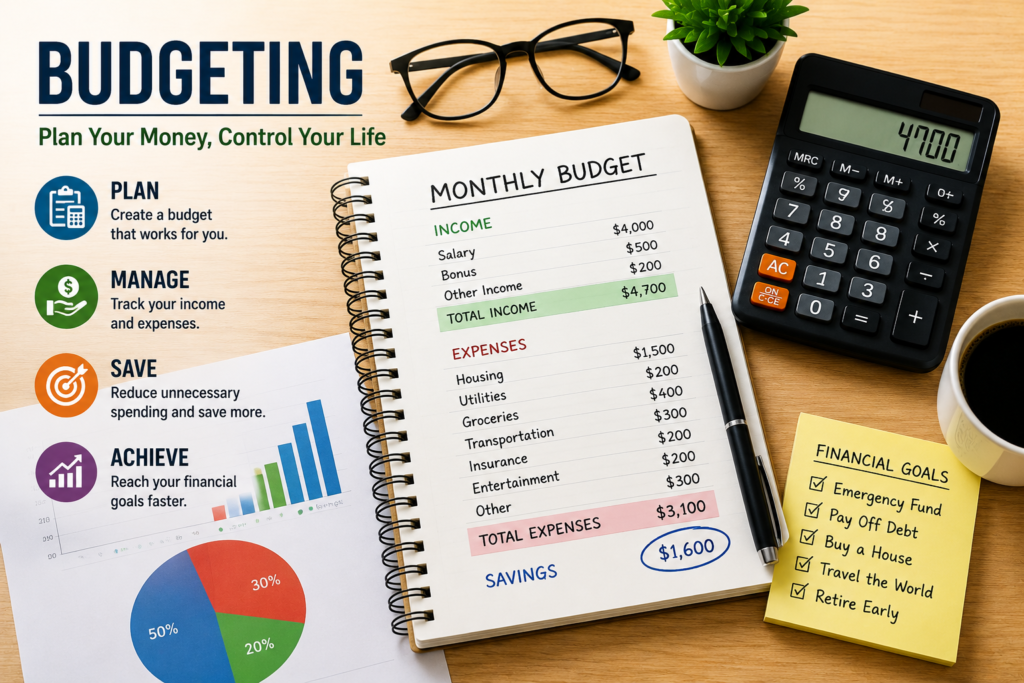
A monthly budget is a financial plan that outlines your income and expenses for a specific month. It helps you allocate money toward necessities, savings, investments, and personal spending while ensuring that expenses do not exceed income.
A budget acts as a roadmap for your finances and helps you make informed spending decisions.
Why Is Budgeting Important?
Budgeting offers several financial benefits:
- Better money management
- Reduced financial stress
- Increased savings
- Faster debt repayment
- Improved financial discipline
- Better preparation for emergencies
- Achievement of financial goals
Without a budget, it is easy to lose track of spending and face financial difficulties.
Step 1: Calculate Your Monthly Income
The first step in budgeting is determining your total monthly income.
Income sources may include:
- Salary
- Freelance earnings
- Business income
- Rental income
- Investment income
- Side hustles
Always calculate your net income, which is the amount you receive after taxes and deductions.
Accurate income calculations create a realistic foundation for your budget.
Step 2: Track Your Expenses
Before creating a budget, you need to understand your spending habits.
Common expense categories include:
Fixed Expenses
These expenses remain relatively constant each month.
Examples:
- Rent
- Mortgage payments
- Insurance
- Loan payments
- School fees
Variable Expenses
These expenses change monthly.
Examples:
- Food
- Utilities
- Transportation
- Entertainment
- Shopping
Tracking expenses for at least one month provides valuable insights into spending patterns.
Step 3: Categorize Your Spending
Organizing expenses into categories makes budgeting easier.
Popular categories include:
Housing
- Rent
- Property taxes
- Home maintenance
Transportation
- Fuel
- Public transport
- Vehicle maintenance
Food
- Groceries
- Dining out
Utilities
- Electricity
- Water
- Internet
Savings
- Emergency fund
- Investments
Personal Spending
- Entertainment
- Shopping
- Hobbies
Categorization helps identify areas where spending can be reduced.
Step 4: Apply the 50/30/20 Budget Rule
The 50/30/20 rule is one of the simplest budgeting methods.
50% Needs
Essential expenses such as:
- Housing
- Food
- Utilities
- Transportation
30% Wants
Non-essential spending such as:
- Entertainment
- Dining out
- Travel
- Subscriptions
20% Savings and Debt Repayment
This portion goes toward:
- Emergency savings
- Investments
- Loan repayment
This rule provides a balanced approach to money management.
Step 5: Set Financial Goals
Financial goals give purpose to your budget.
Short-Term Goals
- Emergency fund
- Vacation savings
- Paying off credit cards
Medium-Term Goals
- Buying a vehicle
- Starting a business
- Education expenses
Long-Term Goals
- Home ownership
- Retirement
- Financial independence
Clear goals improve motivation and financial discipline.
Building an Emergency Fund
An emergency fund protects you from unexpected financial challenges.
Experts recommend saving enough to cover three to six months of living expenses.
Benefits include:
- Reduced financial stress
- Better financial security
- Less dependence on debt
- Improved peace of mind
Emergency savings should be easily accessible when needed.
Common Budgeting Mistakes
Many people fail at budgeting due to avoidable mistakes.
Not Tracking Expenses
Failure to monitor spending often leads to overspending.
Setting Unrealistic Goals
Extremely restrictive budgets are difficult to maintain.
Ignoring Emergency Savings
Unexpected expenses can quickly disrupt finances.
Forgetting Irregular Expenses
Annual expenses should be included in monthly planning.
Giving Up Too Soon
Budgeting requires consistency and patience.
Avoiding these mistakes improves long-term success.
Budgeting Tools and Apps
Technology has made budgeting easier than ever.
Popular tools help users:
- Track expenses
- Monitor savings
- Set financial goals
- Analyze spending patterns
Using budgeting software can improve financial awareness and accountability.
How Budgeting Helps Save Money
Budgeting creates opportunities for savings by:
- Identifying unnecessary expenses
- Reducing impulse purchases
- Encouraging disciplined spending
- Prioritizing financial goals
Small savings accumulated consistently can lead to significant wealth over time.
Budgeting for Different Income Levels
Low Income
Focus on necessities and emergency savings.
Middle Income
Balance spending, saving, and investing.
High Income
Emphasize wealth building and long-term investments.
Regardless of income level, budgeting remains essential for financial success.
Tips for Sticking to Your Budget
- Review finances weekly.
- Avoid impulse purchases.
- Use cash when possible.
- Set realistic spending limits.
- Track progress regularly.
- Celebrate financial milestones.
Consistency is the key to successful budgeting.
Conclusion
A monthly budget is one of the most powerful tools for achieving financial stability and long-term success. By understanding income, tracking expenses, setting goals, and controlling spending, anyone can improve their financial situation.
Budgeting is not about restricting your lifestyle. It is about making intentional financial decisions that support your goals and future aspirations. Start creating your monthly budget today and take the first step toward financial freedom.